Luxury ethnic wear spanning children's, teens' and women's ranges.
- Year
- 2025
- Scope
- Custom add-ons, Variant architecture, Seasonal merchandising
- Live Store
- Visit live store ↗
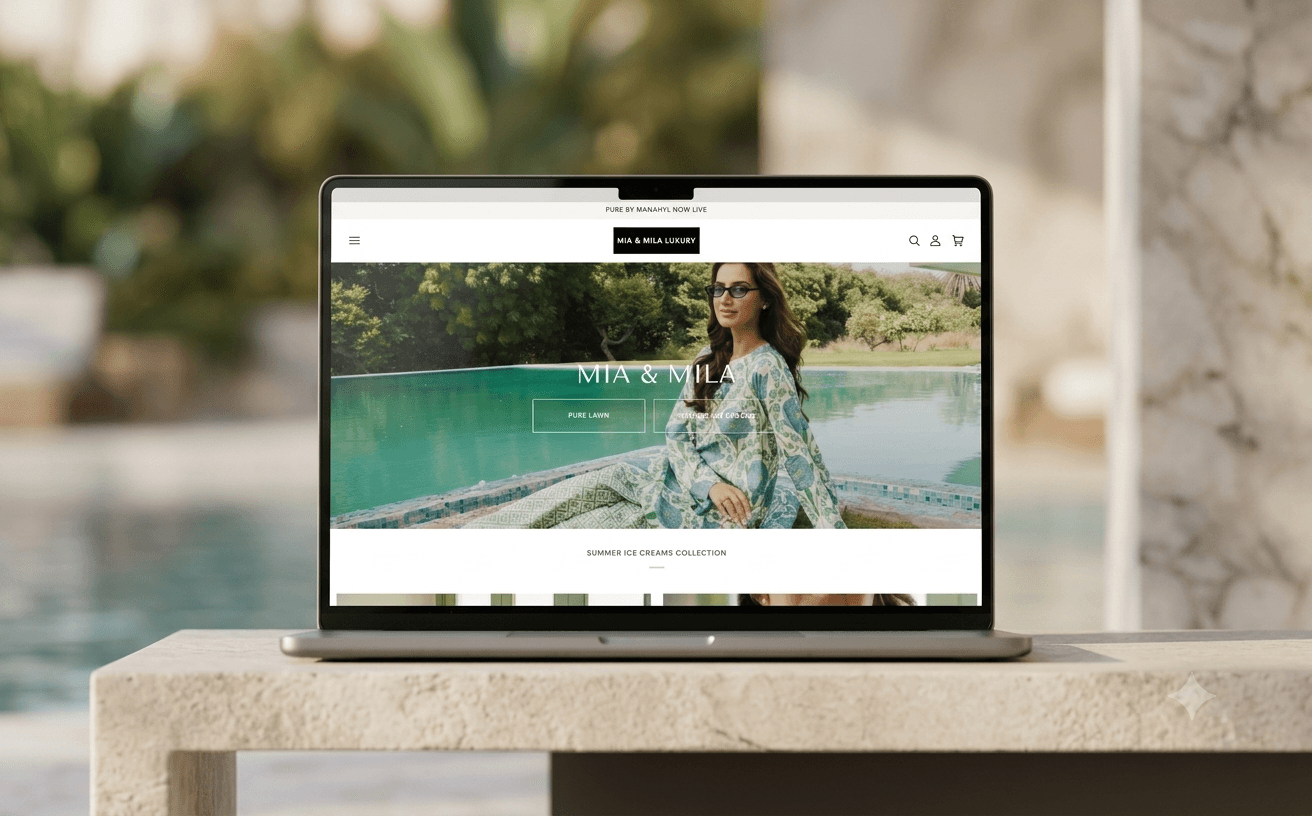
The brief & problem
Shoppers frequently request garment customizations (adding matching sleeves or custom dupattas). The brand was relying on a third-party upsell app that decoupled alterations from line items, causing warehouse confusion and manual order tracking.
What I built
Replaced the third-party app with native Shopify Line Item Properties integrated directly into the product template.
Calculated customization pricing dynamically in real time and attached selected alterations to specific garment line items.
Engineered custom size charts with visual age-group tabs (Kids, Teens, Adults).
Streamlined the checkout pipeline so fulfillment staff see exact garment customization notes directly on packing slips.
Outcomes & Results
Alterations are attached to the garment they belong to as native line item properties, priced in real time, and printed on the packing slip, so fulfilment sees exactly what was ordered. The third-party upsell app, its monthly fee and its JavaScript are gone.
- Line item properties
- Native
- For customization
- 0 apps
- Size charts
- Kids to Adults
Client Feedback
“Removing the external alteration app and building custom sleeve add-ons directly into the theme made our fulfillment process seamless and error-free.”
— Managing Partner, Mia & Mila Luxury
Worth knowing
Native Shopify theme features beat third-party apps almost every time. Building bespoke Liquid line item properties eliminated monthly fees and fixed order fulfillment accuracy permanently.
Technologies & Architecture
- Shopify Liquid
- Line Item Properties
- Custom PDP Add-ons
- JavaScript