Consumer tech brand selling smartwatches, earbuds and audio across Pakistan.
- Year
- 2026
- Scope
- Theme architecture, Performance, Campaign tooling
- Live Store
- Visit live store ↗
The brief & problem
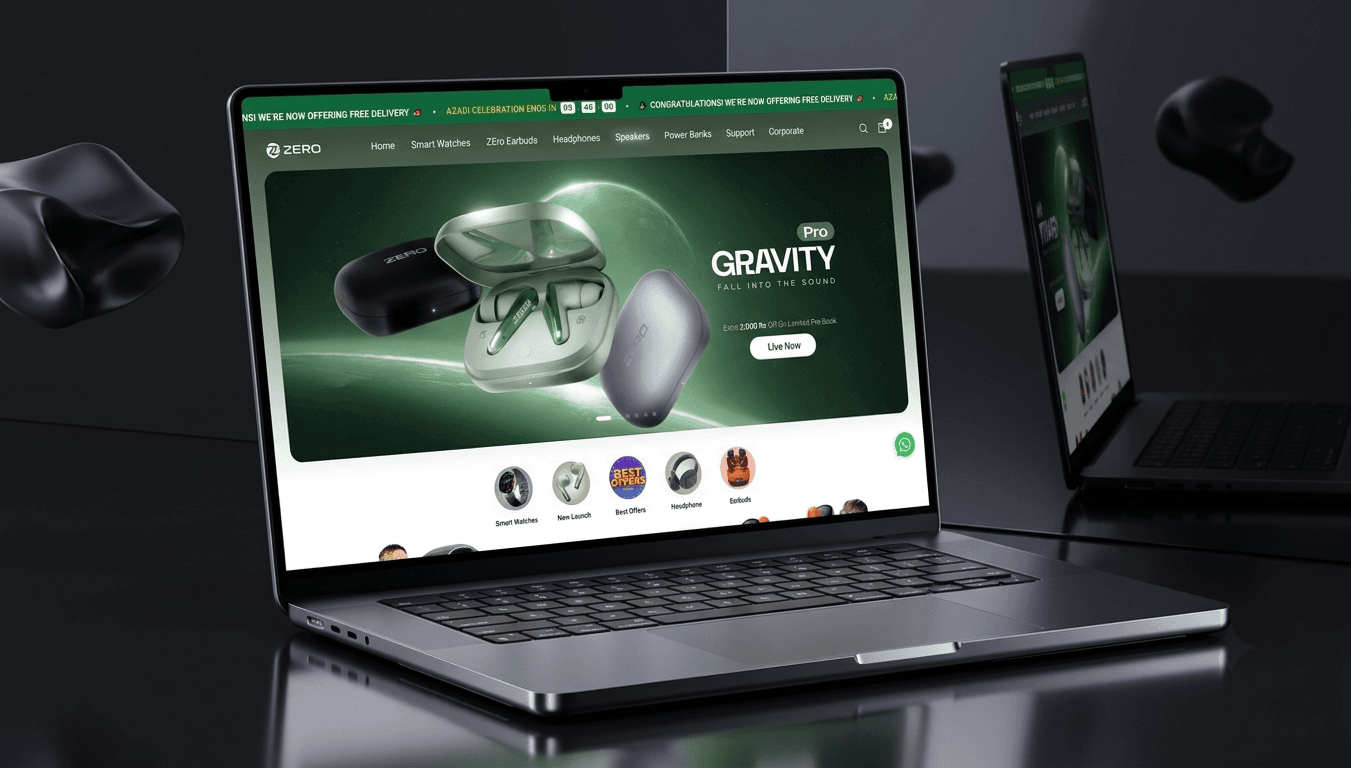
The storefront belongs to a high-traffic wearable-tech brand, and mobile performance had degraded steadily as apps, tracking scripts and campaign code accumulated. Product pages were slow enough to affect both search rankings and mobile conversion. The constraint: a live, high-revenue store with zero downtime tolerance. There was no option to take it offline and no appetite for a risky full rebuild.
What I built
Conducted a comprehensive performance audit using Web Vitals field data across high-traffic PDP and collection templates.
Deferred and conditionally loaded non-critical third-party app scripts that were blocking the main thread.
Implemented modern WebP/AVIF responsive image delivery with precise layout dimensions to eliminate Cumulative Layout Shift (CLS).
Refactored complex nested Liquid loops into optimized flat queries, cutting server response time (TTFB).
Audited third-party tracking tags and purged obsolete tracking pixels left behind by past ad campaigns.
Rebuilt the primary marketing landing pages as modular Shopify 2.0 drag-and-drop sections.
Outcomes & Results
Non-critical app scripts now load after first render instead of blocking it, images ship in modern formats at the dimensions the layout reserves for them, and the tracking left behind by past campaigns is gone. The marketing team launches seasonal campaign pages from modular Shopify 2.0 sections without waiting on a developer.
- Custom theme
- Liquid
- Shopify OS
- 2.0
- Image delivery
- WebP / AVIF
Worth knowing
Most e-commerce speed optimization fails because it only compresses images. Real performance gains come from auditing what code actually executes on the main thread and purging legacy third-party scripts that nobody was monitoring.
Technologies & Architecture
- Shopify 2.0
- Liquid
- Core Web Vitals
- JavaScript